
One of the most painful and annoying things to deal with is jaw pain. Misalignment in the jaw can make your daily life a lot harder, whether it’s a mild ache or a lot of pain. Fortunately, orthodontics El Paso has a number of ways to help with jaw pain and get the jaw back in line. In this blog post, we’ll go into great detail about how orthodontic bite correction and other treatments can help with jaw pain, symptoms of a misaligned jaw, and more.
What to Know About Jaw Pain and Misalignment
Before we talk about how orthodontic care can help, it’s important to know what causes jaw pain and misalignment in the first place.
Problems with your bite can cause jaw pain. This happens when your teeth or jaw are not in the right place. If the jaw isn’t lined up right, it can move in the wrong way, which can cause pain, tension, and discomfort. People may have jaw pain when they chew, talk, or even when their mouth is at rest. Some common reasons why your jaw hurts are:
- Problems with the temporomandibular joint (TMJ)
- Jaw and teeth that are not lined up correctly
- Grinding or clenching your teeth (often because you’re stressed)
- Overbites or underbites
- Bad posture or muscles that aren’t relaxed evenly
If the jaw isn’t in the right place, it can make a lot of different sounds when you open your mouth, make it hard to chew, or even give you headaches. Fortunately, orthodontics El Paso has treatments that work well to fix these problems.
How Orthodontics El Paso Can Help With Jaw Pain
Braces don’t just straighten teeth; they also line up the whole mouth, including the jaw. An orthodontist can help with jaw pain caused by misaligned jaw symptoms and other related conditions by carefully evaluating and treating the problem.
1. Making the jaw line better
One of the main ways that orthodontics El Paso helps with jaw pain is by making the jaw line up better. When the upper and lower jaws don’t meet properly, it can put extra stress on the jaw’s muscles and joints. This pressure can cause headaches, chronic pain, and trouble moving the jaw.
Braces and clear aligners are just two of the many tools that orthodontists use to slowly move the teeth and jaws into the right position. Orthodontic treatment helps align the jaw by aligning the teeth. This takes stress off the jaw muscles and makes them feel better over time.
2. Fixing problems with your bite
Overbites, underbites, and crossbites can all cause a lot of pain in the jaw. When the teeth don’t fit together right, it puts too much stress on the jaw joint, which can cause pain and tension.
Orthodontists can fix these bite problems with different tools, like traditional braces, clear aligners, or orthodontic bite correction tools. These treatments can stop or ease pain by making the jaw move more naturally, which fixes how the teeth meet.
3. Orthodontic Treatment for TMJ
TMJ orthodontic treatment is all about fixing problems with the temporomandibular joint (TMJ), which is the joint that connects the jawbone to the skull. TMJ problems can make your jaw hurt, stiff, and hard to move.
Braces or other corrective devices can help an orthodontist treat TMJ by straightening the teeth and jaw. Some patients may also benefit from night guards or splints to keep them from grinding their teeth while they sleep. This is a common cause of TMJ problems.
4. Getting rid of teeth grinding and clenching
Grinding your teeth and clenching your jaw, which are often caused by stress or anxiety, can make your jaw hurt and make your teeth more misaligned. These habits can put too much stress on the jaw joint, which can make it inflamed or out of alignment.
Orthodontic treatment can help by fixing the bite problems that cause people to grind their teeth. An orthodontist may also suggest a night guard, which can protect your teeth and jaw from the damage that clenching or grinding your teeth while you sleep can do.
5. Custom Appliances to Help with Jaw Pain
Orthodontists use a number of different custom devices to help ease jaw pain. These could be:
- Headgear is worn outside the mouth and helps the upper jaw grow in the right way and stay in the right place.
- Palatal Expanders: These tools help the upper jaw get bigger, which gives the teeth more room and relieves pressure on the jaw.
- Retainers: After getting braces, retainers keep your jaw and teeth in the right position so that you don’t have any more pain or misalignment.
- You might need Orthodontics El Paso for jaw pain if you have any of these signs:
If your jaw hurts or you think it might be out of alignment, you should see an orthodontist. Here are some signs that it might be time to get help:
- Headaches or migraines that happen a lot: Misalignment can cause tension that leads to headaches, especially near the temples or around the jaw.
- If you hear or feel your jaw click or pop when you open or close your mouth, it could mean that your TMJ is out of alignment or that you have TMJ problems.
- If it hurts or is hard to chew or talk, your jaw may not be in the right place.
- Pain or soreness in the face: Chronic jaw pain can make other parts of the face hurt, like the cheeks, temples, or neck.
- Grinding or clenching your teeth: If you do this a lot, it can cause jaw pain and misalignment over time.
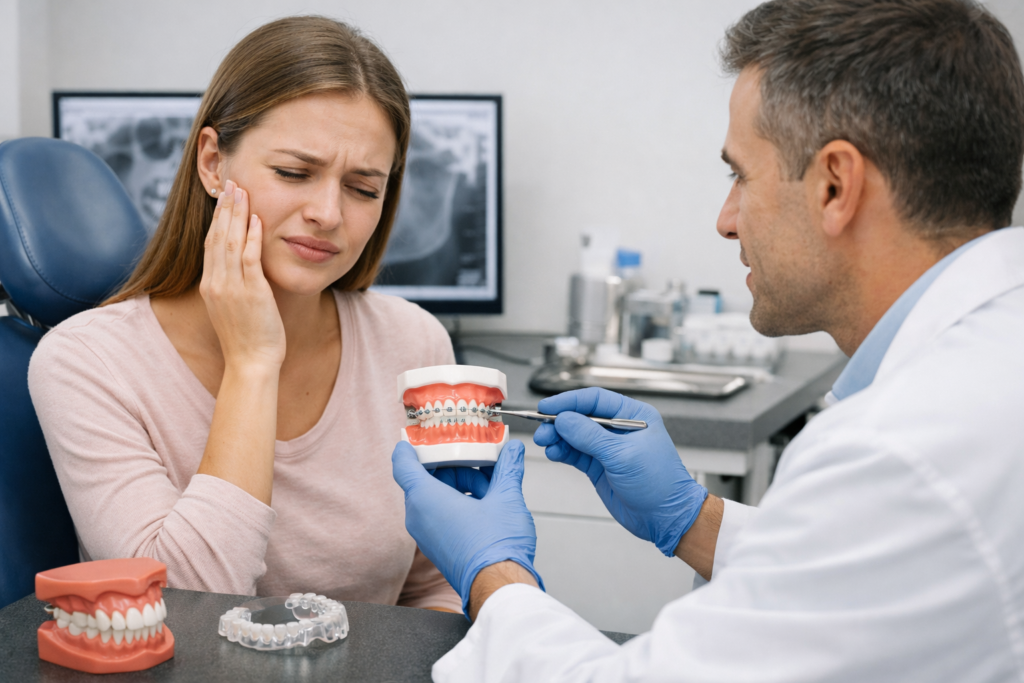
What Orthodontic Bite Correction Does
Orthodontic bite correction is one of the most important parts of treating jaw pain caused by misalignment. If your bite isn’t aligned properly, it can hurt, make it hard to eat, and wear down your teeth unevenly. Orthodontic treatment makes sure that the upper and lower teeth meet correctly by fixing the bite. This can help relieve pain and pressure on the jaw joint.
Orthodontists treat a number of different types of bite problems, such as:
- Overbite: The teeth on top stick out too far over the teeth on the bottom.
- Underbite: The lower teeth stick out farther than the upper teeth.
- Crossbite: When you bite down, your upper and lower teeth don’t line up right.
- When you bite down, there is a space between your upper and lower teeth.
Orthodontic bite correction helps the jaw work properly and lowers the risk of pain or discomfort by fixing these problems. Orthodontic care can help with jaw pain in many ways.
Orthodontic care for jaw pain and misalignment can help in many ways, such as:
- Pain Relief: Orthodontics can help with chronic jaw pain and discomfort by fixing bite problems and making sure the jaw is in the right place.
- Better Jaw Function: When the jaw is properly aligned, it can move more smoothly, which makes it easier to chew, speak, and do other things.
- Avoiding Problems in the Future: Getting help early can stop problems from getting worse in the future, which will save you time and money on treatments.
- Better Overall Health: Fixing a misaligned jaw can make your teeth and gums healthier overall, lowering the risk of tooth wear, gum disease, and other problems that go along with them.
Last Thoughts
Orthodontic care can help if you have jaw pain, misaligned jaw symptoms, or other bite problems. An experienced orthodontist in El Paso can help ease your pain and get your jaw back on track with treatments like TMJ orthodontic treatment, orthodontic bite correction, or other methods.
It’s important to treat jaw pain right away because if you don’t, it could get worse later on. Don’t put off seeing an orthodontist until the pain gets worse. Make an appointment to talk about your options for relief. At Hansen Orthodontics & Aesthetics, we can help you find the best way to get a healthy smile without pain.
Want to learn more about jaw pain and bite alignment? You can explore teeth alignment at Hansen Orthodontics & Aesthetics, or read the National Institute of Dental and Craniofacial Research’s TMD overview for general guidance.