
Many parents assume orthodontic care begins in the teenage years, but modern dentistry tells a different story. Early orthodontic evaluations play a critical role in guiding proper facial and dental development, often preventing more complex issues later in life. According to orthodontic experts, age 7 is the ideal time for a child’s first orthodontic visit—not necessarily to start treatment, but to assess growth, alignment, and potential concerns.
At Hansen Orthodontics & Aesthetics, early care is about prevention, education, and setting the foundation for a healthy, confident smile.
Why Early Care Is Important for Children
Children’s mouths change rapidly during growth. Baby teeth fall out, permanent teeth erupt, and jaws develop at different rates. An early evaluation allows orthodontists to identify concerns before they become serious problems.
Some of the most common issues seen in young patients include:
- Crowding or spacing problems
- Early or late loss of baby teeth
- Jaw growth imbalances
- Thumb sucking or prolonged pacifier use
- Bite issues that affect chewing or speech
Addressing these concerns early can reduce the need for more invasive treatments later.
Understanding Braces for Kids at an Early Age
When parents hear braces for kids, they often worry their child will need full treatment immediately. In reality, early evaluations are not about placing braces right away, but about determining if and when intervention might be beneficial.
Early monitoring helps orthodontists:
- Guide jaw growth while bones are still flexible
- Create space for incoming permanent teeth
- Reduce the severity of future alignment problems
- Improve facial balance and symmetry
In many cases, early care shortens or simplifies treatment during adolescence.
What Happens During an Orthodontic Evaluation
An initial orthodontic evaluation is simple, comfortable, and stress-free for children. It focuses on observation and planning rather than immediate correction.
During the visit, the orthodontist may:
- Examine tooth eruption patterns
- Evaluate jaw alignment and facial growth
- Take digital X-rays or 3D scans if needed
- Assess bite function and spacing
- Discuss findings and recommendations with parents
This appointment provides clarity and peace of mind, even if no treatment is required at the time.
Why Orthodontic for Children Is Different from Adult Care
Orthodontic for children focuses on growth guidance rather than correction alone. Because children’s jaws are still developing, orthodontists can influence growth patterns in ways that are not possible in adults.
Benefits of early orthodontic care include:
- Improved jaw development
- Reduced risk of impacted teeth
- Better airway and breathing support
- Prevention of facial asymmetry
- Easier, shorter treatment later
This proactive approach supports both oral health and overall facial development.
When Should a Child See an Orthodontist?
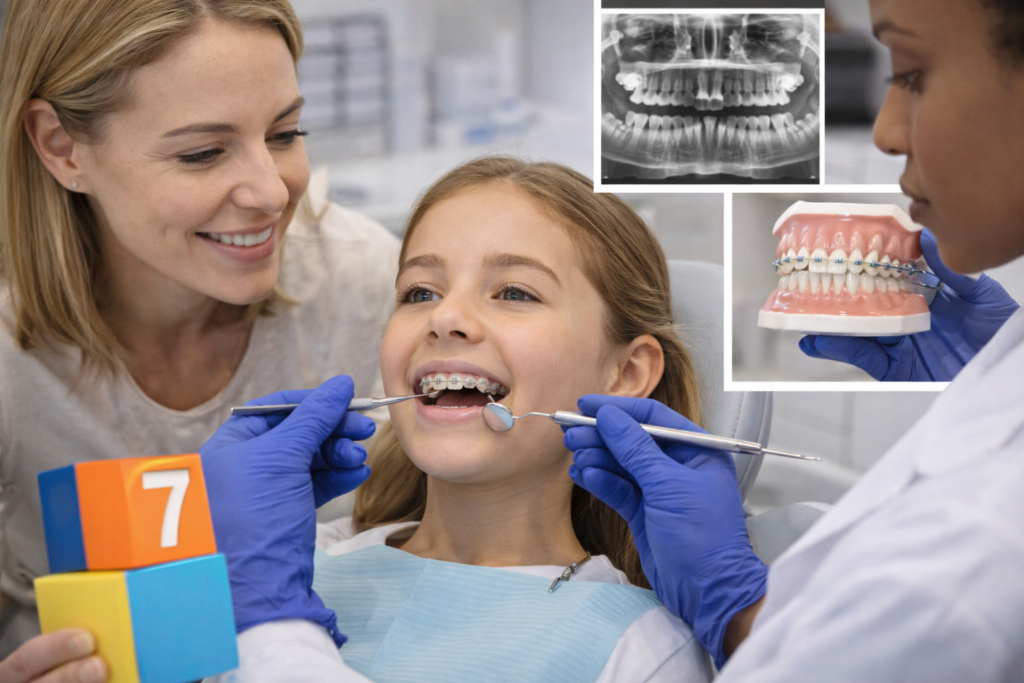
Parents often ask, when should a child see an orthodontist for the first time? The American Association of Orthodontists recommends age 7 as the ideal milestone.
At this age:
- Permanent teeth are beginning to emerge
- Jaw growth patterns become more visible
- Potential problems can be identified early
- Treatment timing can be planned strategically
Seeing an orthodontist at age 7 doesn’t mean treatment will start immediately—it simply ensures the right care at the right time.
The Role of Interceptive Orthodontics
One of the biggest advantages of early evaluations is the opportunity to use interceptive orthodontics. This phase of treatment focuses on correcting developing issues before they worsen.
Interceptive care may involve:
- Palatal expanders to widen narrow arches
- Space maintainers for early tooth loss
- Limited braces or aligners on select teeth
- Habit correction devices
- Growth guidance appliances
By intervening early, orthodontists can often prevent more complex procedures in the future.
Benefits of Early Pediatric Care
Parents who prioritize early orthodontic care often see long-term benefits for their children’s health and confidence.
Key advantages include:
- Reduced treatment time during teenage years
- Lower likelihood of tooth extractions
- Improved bite function and comfort
- Enhanced facial balance
- Increased self-esteem during critical developmental years
These benefits extend far beyond aesthetics, supporting lifelong oral health.
Why Pediatric Orthodontic Expertise Matters
Choosing a provider with experience in pediatric orthodontic care ensures that children receive age-appropriate, compassionate treatment. Pediatric-focused orthodontists understand how to communicate with young patients and tailor care to their emotional and developmental needs.
Parents should look for practices that offer:
- Child-friendly environments
- Clear communication with parents and children
- Conservative, growth-focused treatment plans
- Advanced diagnostic technology
- Ongoing monitoring and support
This specialized approach helps children feel comfortable and confident throughout their orthodontic journey.
Supporting Parents Through the Process
Early orthodontic care is a partnership between the orthodontist and the family. Parents play a vital role in supporting treatment success.
Helpful ways parents can contribute include:
- Encouraging good oral hygiene habits
- Attending regular follow-up visits
- Monitoring habits like thumb sucking
- Promoting healthy nutrition
- Reinforcing positive attitudes about dental care
When families are informed and involved, outcomes are consistently better.
Why Families Choose Hansen Orthodontics & Aesthetics
Hansen Orthodontics & Aesthetics is trusted by families because of its commitment to early detection, personalized care, and long-term results. Our team understands that early orthodontic decisions shape a child’s future smile and overall well-being.
Families value our practice for:
- Expertise in early orthodontic evaluations
- Gentle, child-centered approach
- Advanced diagnostic tools
- Clear communication and education
- Long-term treatment planning with growth in mind
Our goal is to guide each child toward a healthy, confident smile—at the right pace and the right time.
Conclusion
Early orthodontic evaluations provide a powerful opportunity to support healthy growth, prevent complex dental issues, and build a strong foundation for a child’s future smile. By identifying concerns at the right age and planning thoughtfully, families can reduce treatment complexity, improve outcomes, and give their children the confidence that comes with a healthy, well-balanced smile. Investing in early care is not about starting treatment sooner—it’s about starting smarter.