
Orthodontic Treatment for Teens: What Parents Should Know in 2026
The teenage years are a critical time for dental development, confidence building, and long-term oral health. As orthodontics continues to evolve, parents in 2026 have more information—and more treatment options—than ever before. Understanding when and why to begin orthodontic treatment can help families make informed decisions that support both function and self-esteem.
At Hansen Orthodontics & Aesthetics, teen orthodontics is approached with a balance of advanced technology, personalized care, and a deep understanding of adolescent needs.
Why the Teen Years Are Ideal for Orthodontic Care
Adolescence is often considered the “golden window” for orthodontic treatment. During this stage, the jaw is still growing, which allows orthodontists to guide tooth movement and bite alignment more efficiently than in adulthood.
In some cases, orthodontists may recommend early braces for teens who show signs of developing bite issues or crowding that could worsen over time.
Key advantages of starting treatment during the teen years include:
- Faster tooth movement due to active bone growth
- Improved bite correction outcomes
- Reduced need for more invasive treatments later
- Positive impact on confidence during formative years
- Easier habit correction, such as thumb sucking or mouth breathing
These benefits make orthodontic care a proactive investment in long-term health.
Understanding Orthodontics for Teens in 2026
Orthodontics for teens in 2026 looks very different from what many parents experienced growing up. Modern techniques focus on comfort, aesthetics, and efficiency, making treatment more teen-friendly than ever.
Today’s orthodontic care emphasizes:
- Customized treatment planning
- Digital imaging and progress tracking
- Discreet and comfortable appliances
- Shorter treatment times in many cases
- A collaborative approach between orthodontist, teen, and parent
Advanced systems, including the Damon bracket system, are often used to support efficient alignment with lighter forces and fewer adjustments.
Common Dental Concerns in Adolescents
Teenagers may experience a variety of orthodontic issues as permanent teeth settle into place. Early identification allows for smoother and more effective treatment.
Common concerns include:
- Crowded or overlapping teeth
- Gaps between teeth
- Overbites or underbites
- Crossbites
- Jaw alignment issues
Addressing these concerns early supports both function and appearance.
Exploring Modern Braces Options
Parents are often surprised by the range of braces options available today. Traditional metal braces are no longer the only solution, and each option offers unique advantages depending on a teen’s needs and lifestyle.
Popular options may include:
- Modern metal braces with smaller brackets
- Ceramic braces that blend with natural teeth
- Self ligating braces designed to reduce friction and adjustment time
- Damon braces, which allow teeth to move more naturally as the arch develops
An orthodontist helps families choose the best option based on dental needs, budget, and personal preferences.
Are Clear Aligners for Teens a Good Choice?
For some adolescents, clear aligners for teens provide a flexible and discreet alternative to braces. These removable trays are custom-made and gradually guide teeth into proper alignment.
Benefits may include:
- Nearly invisible appearance
- Removability for eating and brushing
- Increased comfort with fewer irritations
- Digital monitoring of progress
However, aligners require responsibility and consistency, making them best suited for teens who can follow wear instructions closely.
When Braces for Adolescents Are the Best Solution
Despite advancements in aligner technology, braces for adolescents remain the most effective option for many complex orthodontic cases. Braces provide continuous control over tooth movement and are not dependent on patient compliance.
They are especially helpful when orthodontists recommend early braces to guide jaw development before all permanent teeth are fully in place.
Braces are often recommended for:
- Significant crowding or rotation
- Severe bite issues
- Jaw alignment concerns
- Teens who may forget to wear aligners
- Cases requiring precise movement
Your orthodontist will explain why braces may be the most reliable choice in certain situations.
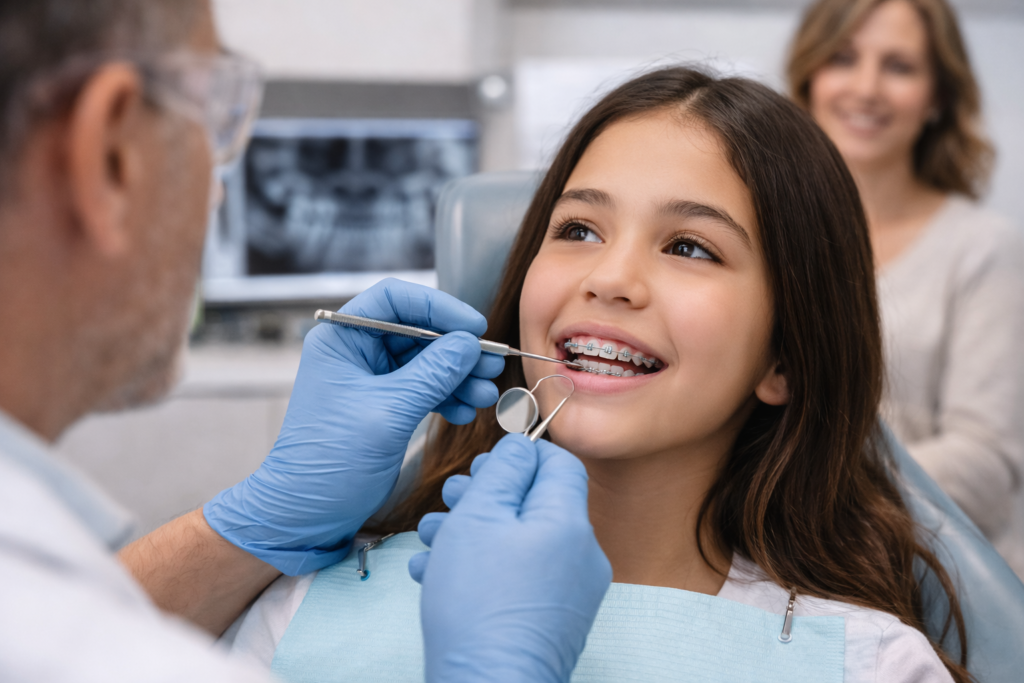
Beyond Straight Teeth: The Goal of Smile Correction
Orthodontic care is about more than aesthetics. True smile correction involves aligning teeth, balancing the bite, and supporting facial harmony.
A corrected smile can contribute to:
- Improved chewing and speech
- Reduced jaw strain
- Easier oral hygiene
- Enhanced facial balance
- Increased self-confidence
These functional benefits often last a lifetime.
The Importance of Confidence During Teen Years
The teenage years are deeply tied to self-image. A healthy, confident smile can positively influence social interactions, academic participation, and emotional well-being.
Orthodontic treatment may help teens:
- Feel more comfortable smiling
- Participate more confidently in social settings
- Reduce self-consciousness
- Build positive self-esteem
- Develop lifelong oral health habits
Supporting teens emotionally throughout treatment is just as important as the physical results.
What Parents Should Expect During Treatment
Parents play a crucial role in ensuring successful outcomes. Understanding the process helps families stay engaged and supportive.
Parents can expect:
- Regular orthodontic appointments
- Guidance on oral hygiene and diet
- Clear timelines and progress updates
- Instructions for appliance care
- Open communication with the orthodontic team
Active parental involvement often leads to smoother treatment experiences.
The Role of Orthodontic Care for Teens in Long-Term Health
Orthodontic care for teens lays the foundation for adult oral health. Proper alignment reduces the risk of dental problems later in life and supports overall well-being.
Long-term benefits include:
- Lower risk of tooth wear
- Improved gum health
- Reduced likelihood of jaw discomfort
- Easier dental maintenance
- Greater smile stability
Orthodontics is an investment that pays dividends well beyond adolescence.
Why Families Trust Hansen Orthodontics & Aesthetics
Hansen Orthodontics & Aesthetics is dedicated to delivering exceptional care tailored to each teen’s needs. The practice combines advanced technology with a compassionate, patient-centered approach.
Families choose this practice because of:
- Personalized treatment plans
- Modern orthodontic solutions
- Clear communication with parents and teens
- A welcoming, supportive environment
- Commitment to long-term results
This approach helps teens feel confident and cared for throughout their orthodontic journey.
How to Know When Your Teen Is Ready
Every teen is different, but signs it may be time for an orthodontic consultation include:
- Difficulty biting or chewing
- Crowded or crooked teeth
- Jaw clicking or discomfort
- Early or late loss of baby teeth
- Concerns about smile appearance
Early evaluation allows families to plan ahead and avoid unnecessary complications.
Conclusion
Orthodontic treatment for teens in 2026 is more advanced, comfortable, and personalized than ever before. With the right information and a trusted orthodontic team, parents can confidently guide their teens toward a healthy, functional, and confident smile. By addressing alignment during these critical years, families help set the stage for lifelong oral health and self-assurance.